
Brigham City, UT
Golden Spike National
Historic Monument
Located 32 miles west of Brigham City via
Highways 13 and 83.
| Back | Return to Index Page |
ATK Thiokol Propulsion

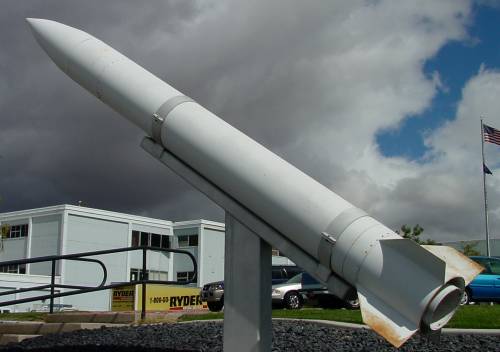
TX-486 Patriot

Golden Spike National Historic Monument
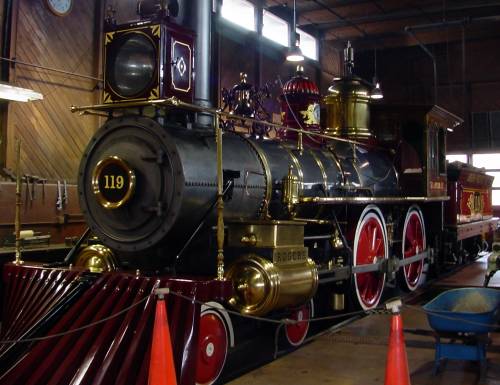

|
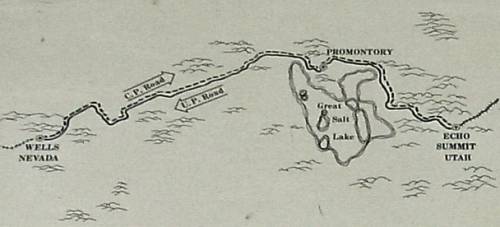
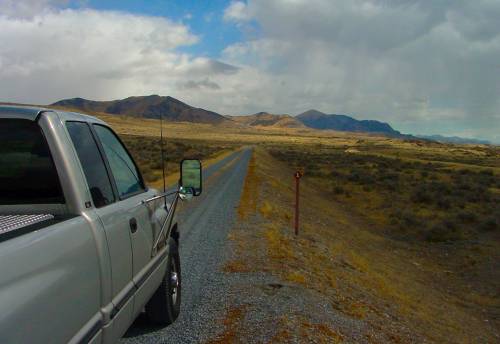
Competition, 1869 After the opening of the Lucin Cutoff in 1904 the historic rail line
north of the Great Salt Lake was of minimal importance. After four additional
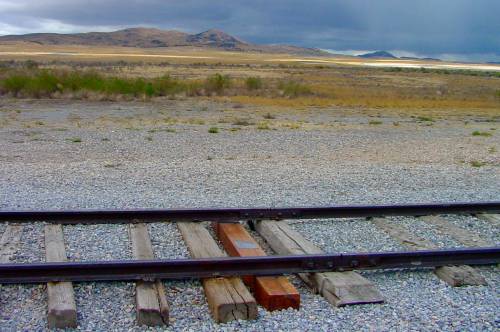
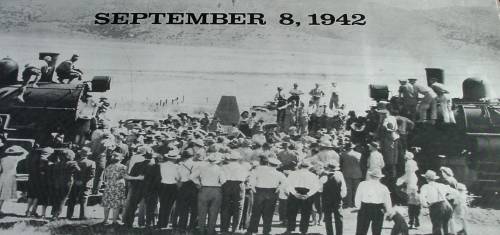
decades of modest use, here in 1942 the last spike was ceremonially
"undriven" before a crowd of UP, SP, and state dignitaries.
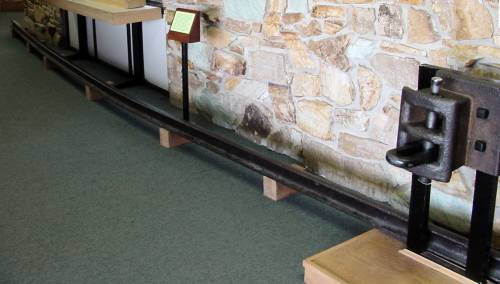
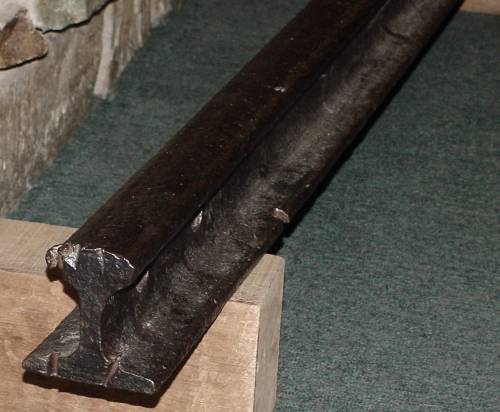
In a few months the entire line between Corinne and Lucin was salvaged,
with the steel directed to America's war effort. |
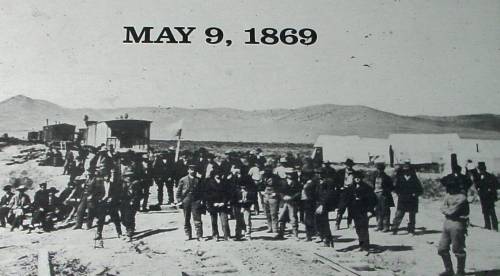
|
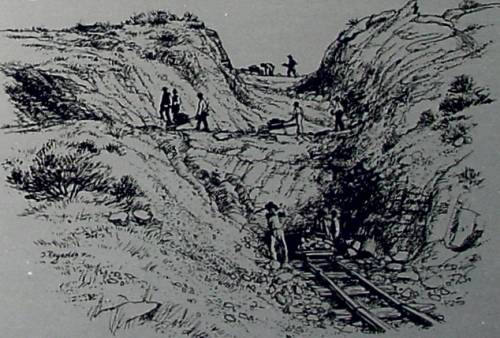
Stairway To Pomontory
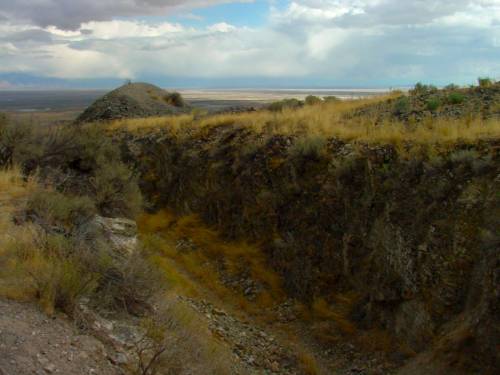
The cut below on the Union Pacific grade is a good example of the stair step construction method used by the railroads. The workers were set to grading, scraping and blasting on sever different levels of a cut at once. This method increased efficience and speed in building the railroad: Excavation on this cut was most likely terminated about April 9, 1869, when the decision was made that the railroads would meet at Promontory. This decision called a halt to the great railroad race which had previously resulted in 250 miles of parallel grading in northern Utah. |
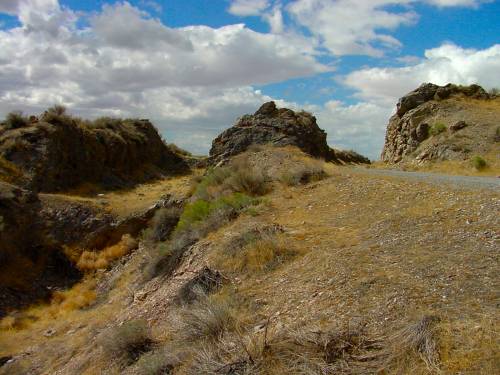
Stairway To Pomontory as it looks today
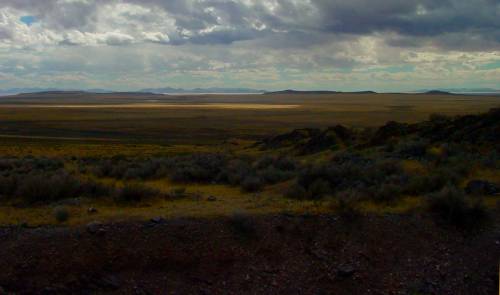
The Great Salt Lake to the South in the distance.
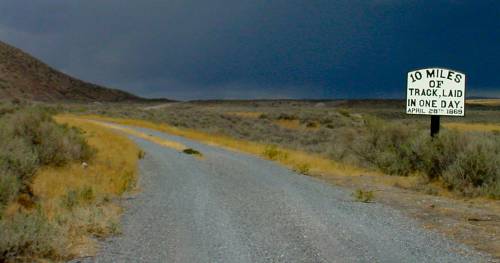
|
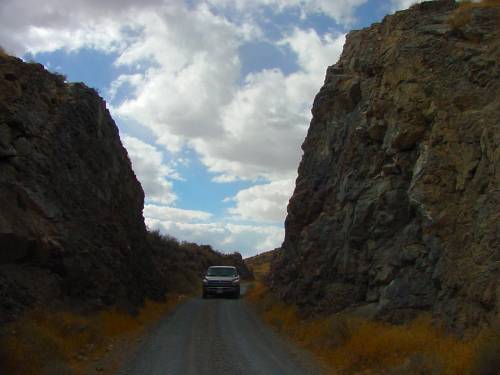
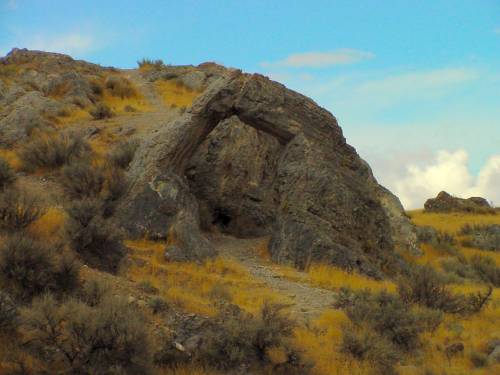
The Last Cut By April of 1869, the Union Pacific was working its Mormon and Irish graders day and night in order to meet the scheduled deadline for the completion of the railroad. Below you is the last cut that they made along the transcontinental route. Cuts such as these were necessary to maintain a smooth and steady grade and to keep within the 2 percent maximum rise (106 feet per mile) mandated by the Pacific Railroad Act of 1862. Atop the cut, notice the excess rock left over from excavation, neatly stacked with the largest rocks |
| Back | Return to Index Page |